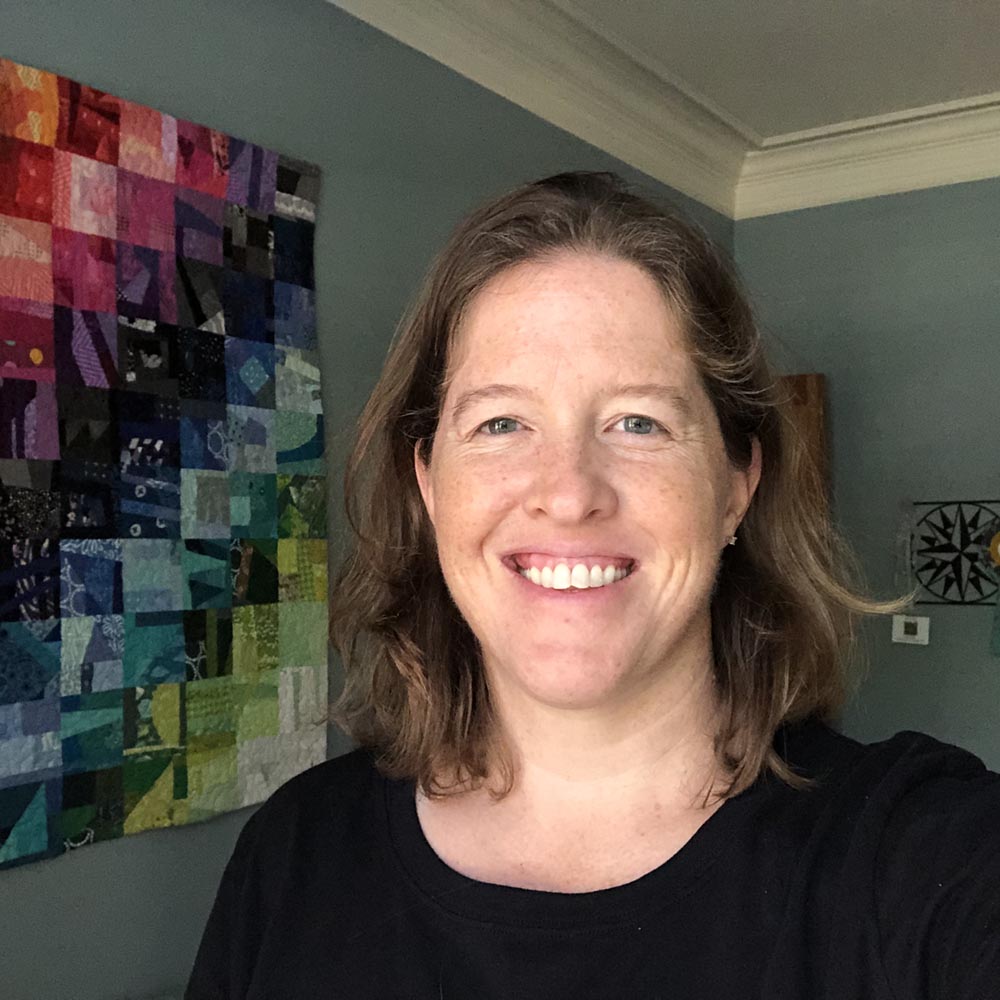
From 2005 until the space shuttle program ended in 2011, I worked in Mission Control in 3 different space shuttle flight control positions. This page was written during that time.
From 2011-2019, I worked on the International Space Station program. Currently (as of 2020), I am part of the Gateway program team working to place a small space station in orbit around the moon.
You might also enjoy reading about my personal history with the space program.
I started working at NASA as a co-op student in 1997 and moved to Houston full-time after I finished grad school in 2002. (Both my undergraduate and master’s degree are in aerospace engineering.) I worked as an analyst before becoming a flight controller in 2005. In reverse order of my certifications, they are:
Rendezvous Guidance and Procedures Officer (call sign “Rendezvous”)
Rendezvous is a very specific and critical phase of flight, and we are the specialists! This position is staffed primarily on the days leading up to and including rendezvous with the space station, and the days leading up to and including undocking from the space station.
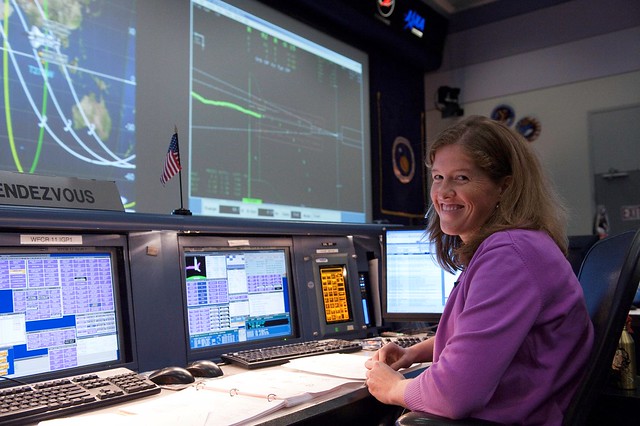
At the Rendezvous console during the docking of STS-133
The job of the Rendezvous Officer is a little hard to describe, because unlike most of the flight controllers in Mission Control, we are not in charge of a physical system and we’re not responsible for any particular pieces of hardware. Instead, we take on more of an integration role. Though we don’t own any hardware, we must know exactly how systems problems affect the crew, the performance of the space shuttle, and our ability to fly in close proximity to the space station and successfully dock. We’re in charge of onboard navigation and targeting software, and therefore must know how to evaluate and incorporate data from onboard sensors to refine our knowledge of our range from and speed towards the space station. I also like to say that “our system is the crew!” Since the final phase of any shuttle rendezvous is manually piloted by the commander, we work closely with the crews during their pre-mission training to make sure we understand how they fly. We must know how the crew operates and how they react to failures so that we can best help them if they need it. We’re like a backseat driver — but in a good way!
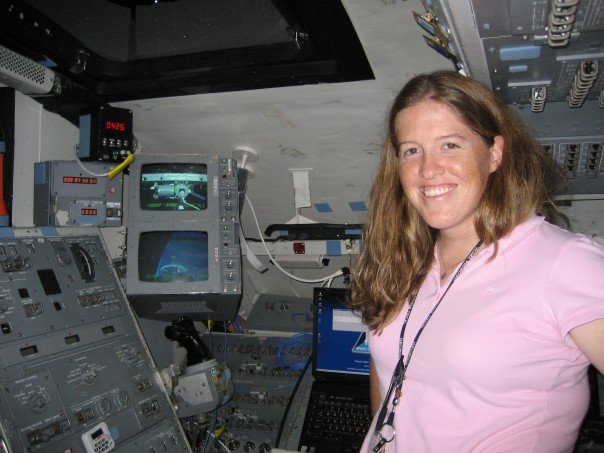
In the space shuttle simulator learning how to pilot the shuttle during rendezvous
I started training for this position in the fall of 2008, and certified in the summer of 2009. I have worked 4 missions at this position: STS-128, STS-129, STS-133 and STS-134. For STS-129 and STS-133, I was the “Lead Rendezvous.” This means I supported all of the activities leading up to flight, attended training sessions with the crew, and was the Rendezvous Office on console real-time during both the docking and undocking. It is a fantastic and very rewarding experience to be a lead flight controller for a space shuttle mission!
Related Blog Entries:
- STS-133 Rendezvous (February 2011)
- STS-129 Rendezvous (November 2009)
- STS-129 Undocking (November 2009)
Rendezvous Procedures Specialist (call sign “RPS”)
This position supports the Rendezvous Officer from the back room of Mission Control, so I had to get certified as RPS before I was eligible to train to be a Rendezvous Officer. Once we are certified as Rendezvous Officers, we support both the front room and back room — our assignment just depends on the flight. My job as RPS is to monitor all of the crew procedures during the rendezvous and undocking phases of flight to ensure that all goes smoothly. If failures occur, I’m able to help recommend ways for the crew and flight controllers should respond.
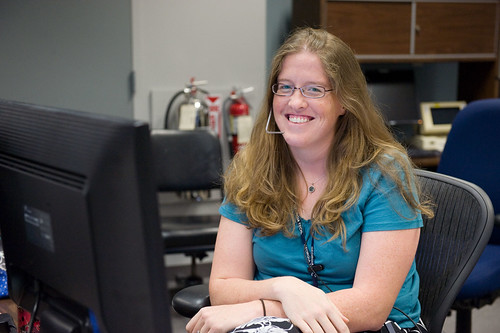
At the RPS console during STS-125
I started training for this position in early 2007, and certified in early 2008. I have worked 6 missions at this position: STS-124, STS-119, STS-125, STS-127, STS-131 and STS-135, the final space shuttle flight. For three of those missions, I was the “lead” RPS, which means I was assigned to work the rendezvous shift in the back room. For those three flights, I also served as the Book Manager, which means I was in charge of maintaining the rendezvous procedures and checklists used by the crew in space.
Related Blog Entries:
- STS-131 Rendezvous (April 2010)
- STS-131 Book Manager (March 2010)
- STS-119 Rendezvous (March 2009)
- STS-124 Rendezvous (June 2008)
Abort Region Determinator Support Officer (call sign “ARD”)
This position is only staffed during a space shuttle launch, and supports the Flight Dynamics Officer (FDO) from the back room of Mission Control. My job is to monitor and maintain a large piece of software that models and predicts shuttle performance during ascent. It also models what would happen if we suffered various failures; this allows us to be prepared for anything that might go wrong.
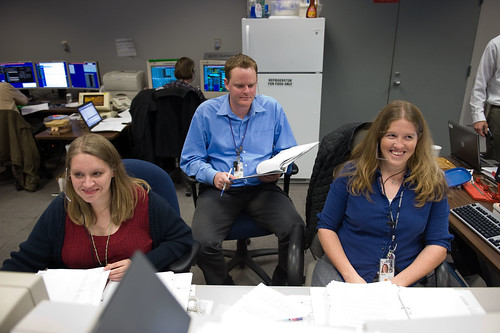
At the ARD Support console for STS-119
I started training for this position in late 2005, and certified in early 2007. I have worked 7 missions at this position: STS-117, STS-120, STS-122, STS-124, STS-119, STS-128 and STS-132.
Related Blog Entries:
- STS-132 Launch (May 2010)
- STS-128 Launch (August 2009)
- STS-119 Launch (March 2009)
- STS-124 Launch (June 2008)
- STS-122 Launch (February 2008)
- STS-120 Launch (October 2007)
- STS-117 Launch (June 2007)